
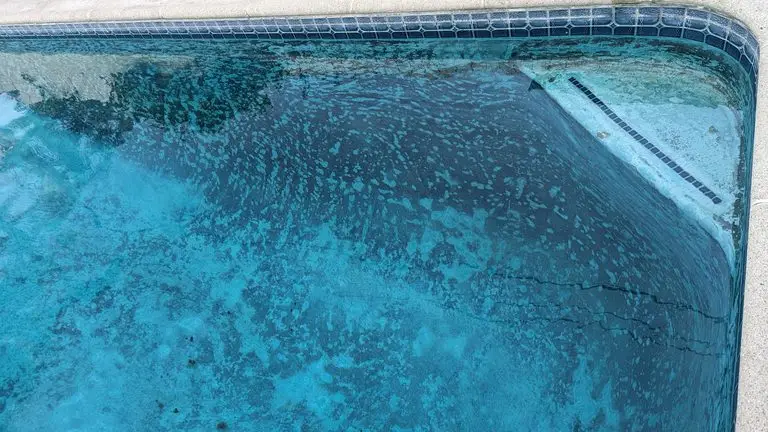
Black algae in pool plaster is the problem that humbles confident pool owners. The spots look small, so you shock the water, and nothing happens. You scrub, they fade, and two weeks later they are back in the same places. That cycle is not bad luck. It is the organism doing exactly what it evolved to do, and beating it takes a different playbook than any other algae.
The honest summary up front: black algae is killable, but only with an aggressive protocol and several weeks of follow-through. Here is what you are actually fighting, the treatment our crews use on Metro Atlanta pools, and the reasons it returns when a treatment stops halfway.
What black algae actually is, and why shock alone fails
Start with the name, because it lies twice. Black algae is not black, it is a very dark blue-green. And it is not a true algae at all. The spots are colonies of cyanobacteria, an ancient organism that behaves less like pond scum and more like a fortress.
Two defenses make it the hardest pool invader to kill. The first is a protective outer layer that sanitizers struggle to penetrate. Chlorine that would erase green algae overnight slides off a black algae colony. The second is roots. The colonies anchor into the pores of plaster, gunite, and pebble finishes, and the visible spot is only the crown. Kill the surface and leave the root, and the colony regrows from below within weeks.
That is why the shock-and-hope approach fails. Water chemistry alone never reaches the part of the organism that matters. The treatment has to be mechanical first and chemical second.
Black algae or something else? A 30-second check
Before you commit to the fight, confirm the enemy. Push a fingernail or a coin against a spot. True black algae feels raised and rooted, and even hard scraping leaves a trace of the colony behind. Pour a small amount of chlorine near a spot and watch it shrug. Anything that wipes away easily, or fades evenly across a whole area, is probably not black algae.
Uniform gray or black shading that follows the water line or gathers around metal fixtures is usually a metal stain, and dark blotches on a vinyl liner are more often mold behind the liner than algae on it. Both problems have their own fixes, and neither responds to the protocol below. When in doubt, send us a photo before you buy anything.
What causes black algae in pools
The spores hitchhike in. The classic route is a swimsuit or pool toy that visited a lake or the ocean and went into the pool without a wash. Around Atlanta that usually means a weekend at Lake Lanier or Allatoona followed by a Sunday swim at home, which is why we see black algae calls climb in late summer. Birds, storm debris, and wind do the rest. Most pools shrug the spores off. The ones that develop colonies almost always share three conditions.
A porous surface gives the roots somewhere to anchor, which is why black algae is overwhelmingly a plaster, gunite, and pebble problem. On vinyl and fiberglass there is nothing to root into. Dark spots on those surfaces are usually mold, metal staining, or shadowed debris rather than true black algae.
Dead spots give it calm water. Colonies start in the places your circulation barely reaches: behind ladders, on step corners, along the deep-end wall below the returns. And inconsistent chlorine gives it the opening, the same weekly gaps that invite the green blooms we covered in our green pool guide. The difference is that green algae takes the whole pool hostage in a day, while black algae quietly digs in for a long occupation.
How to kill black algae, step by step
This is the protocol that works. Skip a step, and you will meet the spots again in two weeks.
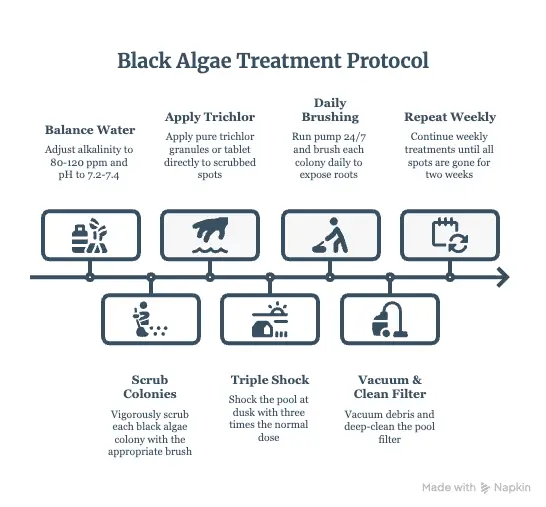
- Balance the water first. Alkalinity 80 to 120 ppm, then pH down to 7.2 to 7.4 so every ounce of chlorine you add works at full strength.
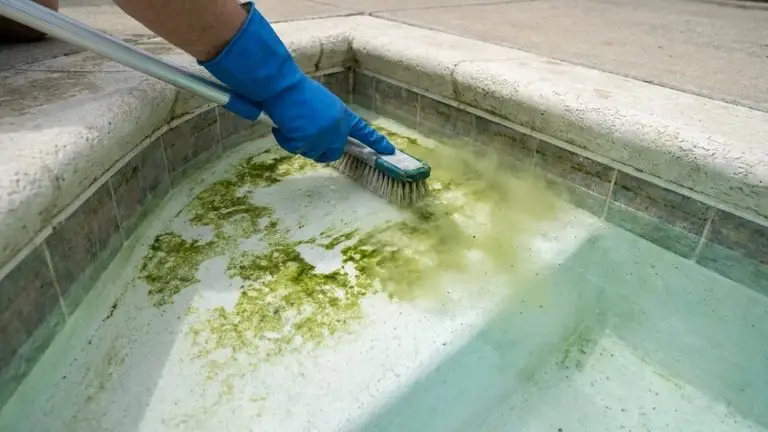
- Scrub each colony hard with the right brush. Stainless-bristle brushes on plaster, gunite, or pebble. The goal is to tear open the protective layer and break the crown off the roots. This step decides the whole treatment.
- Hit the open wounds directly. Pure trichlor granules applied to the scrubbed spots are the standard surface treatment for black algae. The operator handbooks name them for exactly this job. On walls, holding a trichlor tablet against the spot with a pole works the same way. Wear gloves and handle trichlor carefully, because it is a powerful oxidizer.
- Triple-shock the pool at dusk. Black algae calls for roughly three times a normal shock dose, after the brushing, never instead of it.
- Run the pump 24 hours a day and brush every colony again daily for at least a week. The roots regrow the protective layer fast, and daily brushing keeps them exposed to the chlorine.
- Vacuum the debris, then deep-clean the filter. Fragments of the colonies collect in the media, and a filter that is not cleaned after treatment can reseed the pool you just fought for.
- Repeat weekly until every spot has been gone for two full weeks. Declaring victory early is the classic mistake.
The algicide question: copper kills it, but read this first
Walk into a pool store with black algae and you will leave with an algicide bottle. Here is the professional context. Copper-based algicides are among the most effective products against black algae, and the operator standards say so plainly. The same standards flag the catch. Copper ions can stain pool surfaces, and at higher pH they form oxides that leave black stains of their own. Trading algae spots for copper stains is not a win.
Our approach is to lean on the mechanical protocol above and use algicides as a targeted finisher. While any copper product is in the water, the pH stays held firmly in range. Quat-based algicides, the most common bottles on the shelf, are fine general preventives but are not the tool for an established black algae colony.
Why black algae keeps coming back
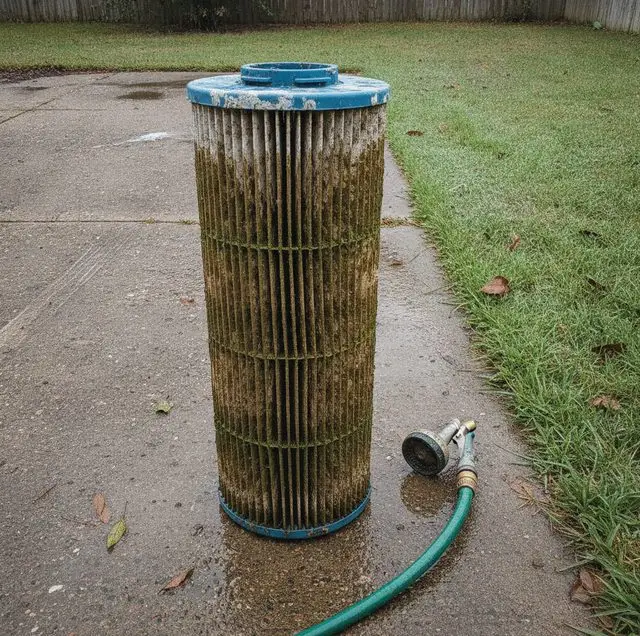
Three reasons, in order of frequency. The roots survived, because the brushing was gentle or the follow-up week never happened, and the colony regrew from the pores. The filter reseeded the pool, because colony fragments sat in the media through the whole treatment. Or the conditions never changed, and the same dead spots with the same chlorine gaps invited the next spores to settle.
Ignoring it has a price beyond looks. Colonies spread spot by spot along the same wall, each one anchoring deeper into the finish, and a plaster surface that hosts black algae for seasons ends up rougher and more porous, which invites the next outbreak. We have seen home inspections flag heavy black algae during sales, and a full remediation on a neglected pool costs several times what an early treatment does.
Set your expectations by the calendar, not the first good result. A real black algae elimination takes two to four weeks of treatment and monitoring. Pools with a history of it deserve a monthly close look at the old spots for the rest of the season. This is also where a weekly service earns its keep. Every weekly pool maintenance visit includes brushing and a chlorine level that never leaves the window black algae needs.
Preventing the next outbreak
Prevention is unglamorous and it works. Wash swimsuits and rinse pool toys after every lake or beach trip, because that is the front door. Brush the whole pool weekly and give the dead spots behind ladders and steps deliberate attention, since colonies need calm, untouched surface to start. Hold chlorine steady week to week rather than letting it swing, and test after storms and heavy swim weekends.
One more factor for older pools: surface condition. Plaster past its prime is rougher and more porous every season, and it hosts black algae more easily each year. If your finish is fifteen years old and the outbreaks are becoming an annual event, the permanent fix conversation runs through our pool renovation team rather than the chemical shelf.
Commercial and HOA pools deserve a special word here. High bather loads bring more spores through the gate, and a health inspector who finds established algae growth can close the pool on the spot. If you operate a community pool with a plaster finish, put black algae checks on the weekly walk-through list. Catching one colony in June is a maintenance note. Finding thirty in August is a shutdown, right in the middle of your busiest month.
Is black algae dangerous?
Directly, not very. Indirectly, enough to take seriously. The cyanobacteria family includes species that produce toxins, and the CDC tracks those harmful blooms mainly in lakes and ponds, not chlorinated pools. A pool with visible black algae spots is mainly signaling something else: sanitizer that has not been keeping up. Algae colonies can harbor bacteria, and the spots make steps and floors slippery. Treat the outbreak, restore the chlorine, and the risk goes with it.
Frequently Asked Questions
How do you get rid of black algae in a pool?
Brush first, then treat. Scrub every colony with a stainless-bristle brush to tear open its protective layer, apply pure trichlor granules directly to the scrubbed spots, then triple-shock the pool at dusk with the pH at 7.2 to 7.4. Run the pump 24 hours a day, brush daily for a week, clean the filter, and repeat weekly until the spots have been gone for two full weeks.
Will shock alone kill black algae?
No. Black algae colonies wear a protective outer layer that chlorine struggles to penetrate, and their roots anchor inside the pores of plaster where pool water never reaches. Shock has a role, but only after hard brushing breaks the colonies open. Shocking without scrubbing is the most common reason a treatment fails.
What causes black algae in a pool?
The spores usually arrive on swimsuits and pool toys that visited a lake or the ocean, with birds and storm debris as secondary carriers. Colonies then take hold where three conditions meet: a porous plaster, gunite, or pebble surface to root into, dead spots with weak circulation, and chlorine that dips from week to week. Vinyl and fiberglass pools rarely host true black algae.
Is black algae in a pool dangerous?
Not very, directly. Black algae belongs to the cyanobacteria family, whose toxin-producing outbreaks the CDC tracks mainly in lakes and ponds, not chlorinated pools. In a pool, the spots chiefly signal that sanitizer has not kept up. Colonies can harbor bacteria, and the growths make steps slippery, so treat the outbreak and restore steady chlorine rather than panicking.
Why does black algae keep coming back?
Because part of the organism survived. Either the roots stayed in the plaster pores after gentle brushing, colony fragments sat in the filter and reseeded the pool, or the dead spots and chlorine gaps that invited it never changed. Plan on two to four weeks of weekly treatment, and only call it beaten after every spot has stayed gone for two full weeks.
Final thoughts
Black algae is the one pool problem where effort beats chemistry. Every shortcut gets found out within two weeks, and every thorough treatment stays won. The pools that win scrub hard, treat the spots directly, shock heavy, clean the filter, and keep at it past the point where the spots disappear. The pools that lose shock once and wait.
Are the spots still winning, or does aging plaster keep giving them a home? Our algae treatment crews handle black algae across Buckhead, Sandy Springs, Brookhaven, Dunwoody, East Cobb, Marietta, Milton, Alpharetta, Johns Creek, and Roswell. See the neighborhoods we serve, then call 404-224-9387 or book a treatment visit and we will bring the brushes.