
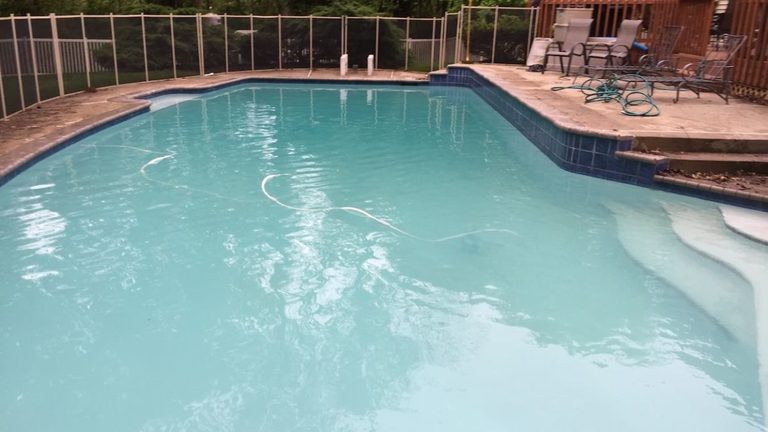
Rain isn’t just water falling into your pool. A typical Metro Atlanta July thunderstorm delivers acidic rainfall, airborne pollen and dust, wind-blown debris, and runoff from your deck and landscaping, all in about 40 minutes. That mix dilutes your chlorine, drags down your pH and alkalinity, and hands the water a fresh meal of contaminants. Cloudy water the next morning isn’t bad luck. It’s the predictable result.
July and August are the heart of storm season here. The metro area averages a thunderstorm every two to three days in midsummer, which means your pool chemistry is getting knocked around far more often than most owners realize. This post covers what a storm actually does to your water, what to do in the first 24 hours afterward, and when cloudiness means something bigger is wrong.
What a thunderstorm actually does to pool chemistry
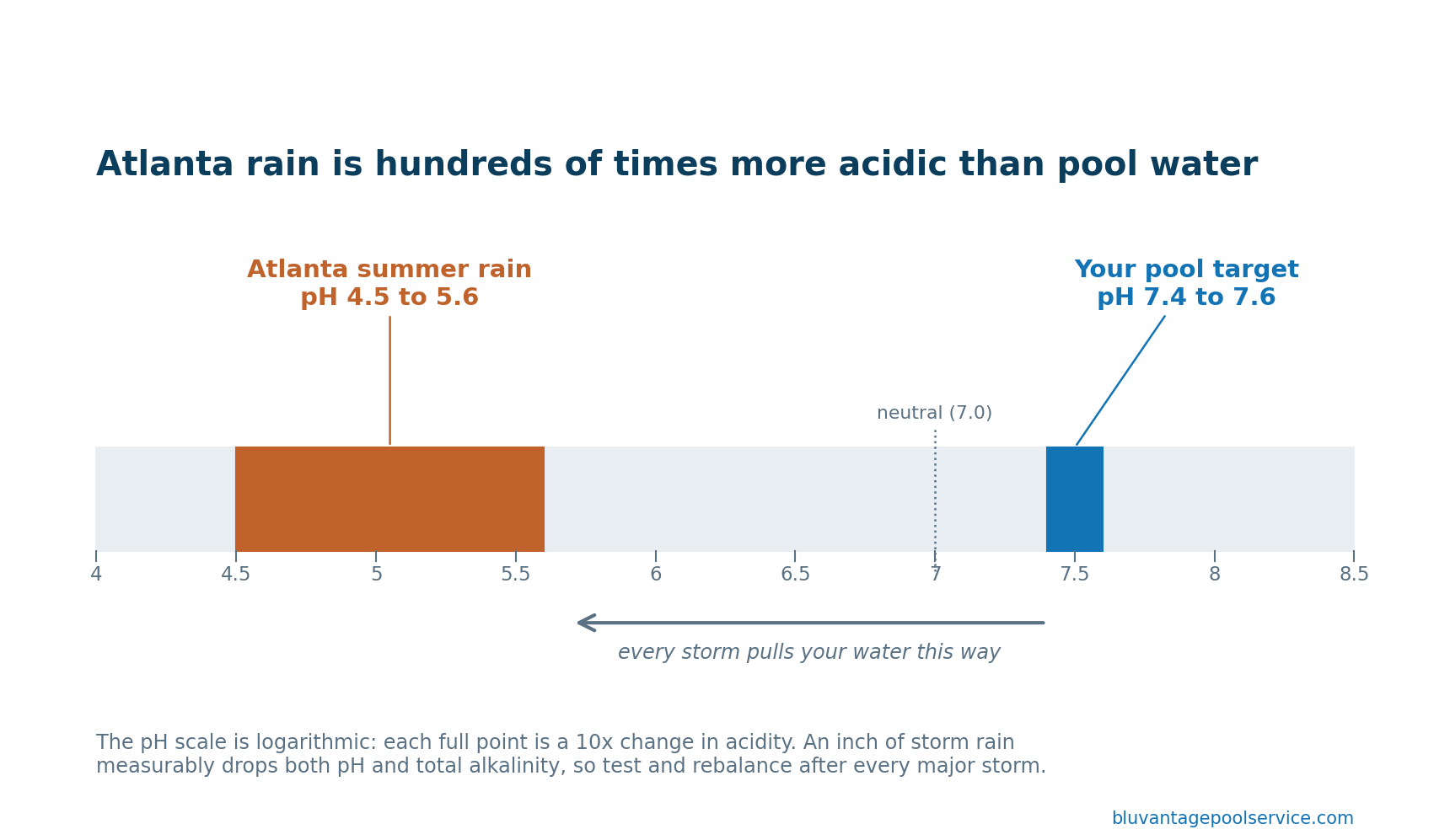
Rainfall in the Southeast is naturally acidic. It usually lands between 4.5 and 5.6 on the pH scale, while your pool wants to sit at 7.4 to 7.6. Dump an inch or two of that into a 20,000-gallon pool and both pH and total alkalinity drop, measurably. Low pH makes water aggressive toward plaster, tile grout, and heater parts. It also pushes more of your chlorine into its most active form, which sounds good until you realize active chlorine is chlorine that burns off fast.
Dilution is the second hit. Rain is unsanitized water, and it lowers your free chlorine concentration at the exact moment the water needs it most. Then the runoff arrives. Water washing in off the deck and lawn carries fertilizer residue, and fertilizer means phosphates. Phosphates are algae food. A pool that drinks runoff after every storm is being handed a starter culture for its next bloom.
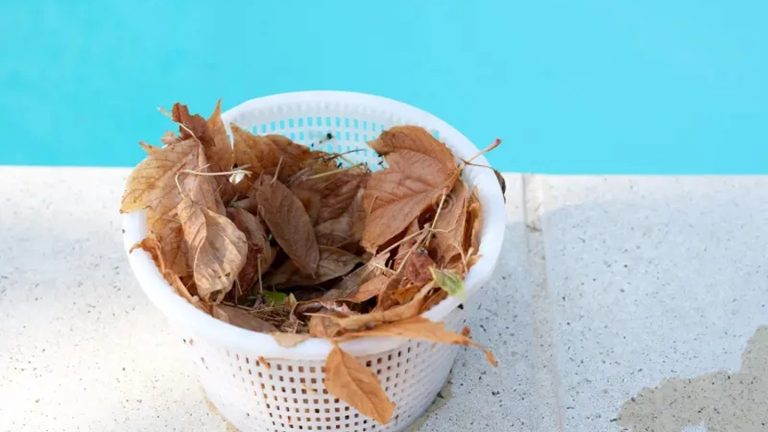
And then there’s the debris. Atlanta’s tree canopy is beautiful and brutal on pools. The wind ahead of a storm shakes loose leaves, pine needles, seed pods, and dust, and all of it lands in the water. Every piece of organic material sitting in your pool consumes chlorine as it breaks down. The cloudiness you see the next day is a mix of fine suspended particles your filter hasn’t caught yet and the early haze of a sanitizer falling behind demand.
Your first 24 hours after a storm
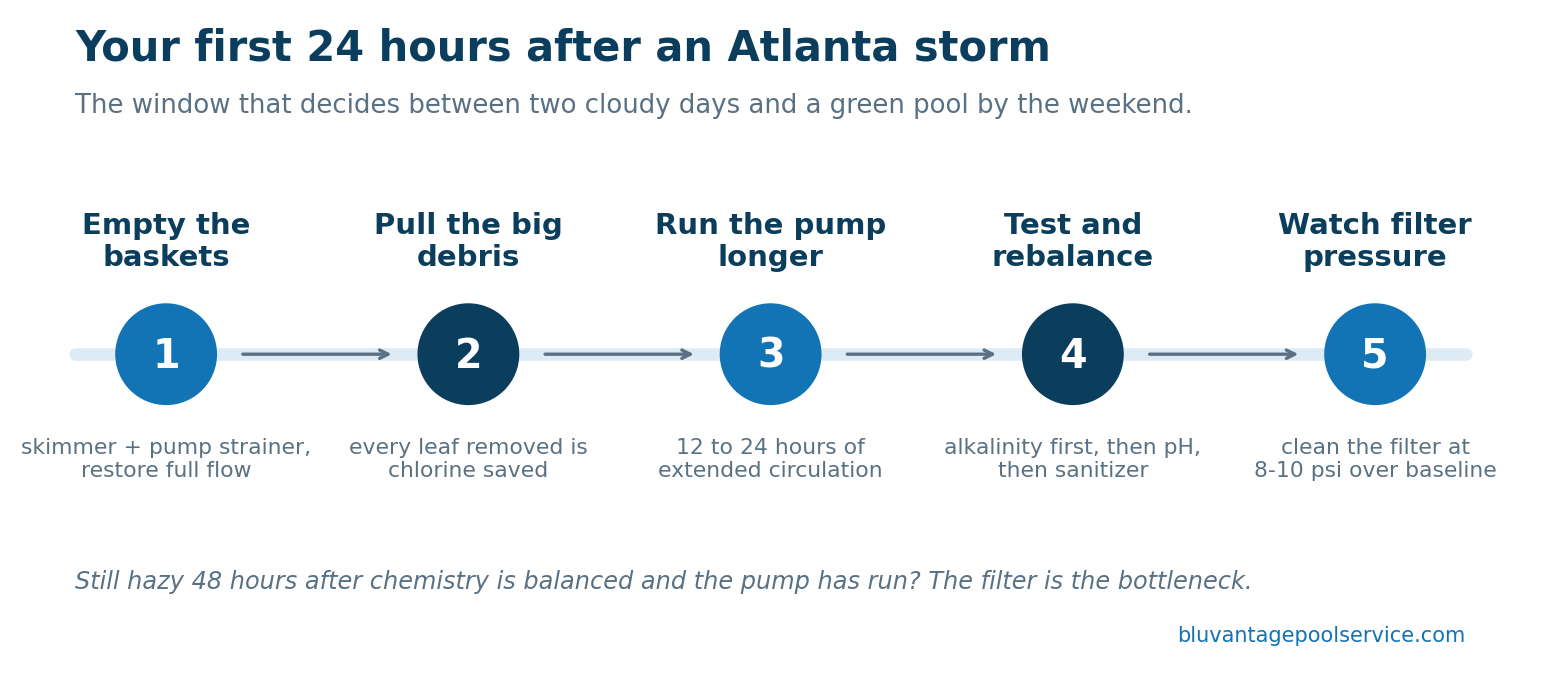
The window right after a storm decides whether you get a two-day cloudy stretch or a green pool by the weekend. Here’s the sequence that matters:
- Empty the skimmer and pump baskets first. A packed skimmer basket chokes flow to the pump, and weak circulation is the last thing you want while the filter is trying to clear the water.
- Skim and remove the big debris from the surface and floor. Everything you physically pull out is chlorine your pool doesn’t have to spend.
- Run the pump longer than normal. Give the system 12 to 24 hours of extended circulation so the filter can pull suspended particles out. If you’re not sure what normal should even be, our guide to pool pump run time in an Atlanta summer covers it.
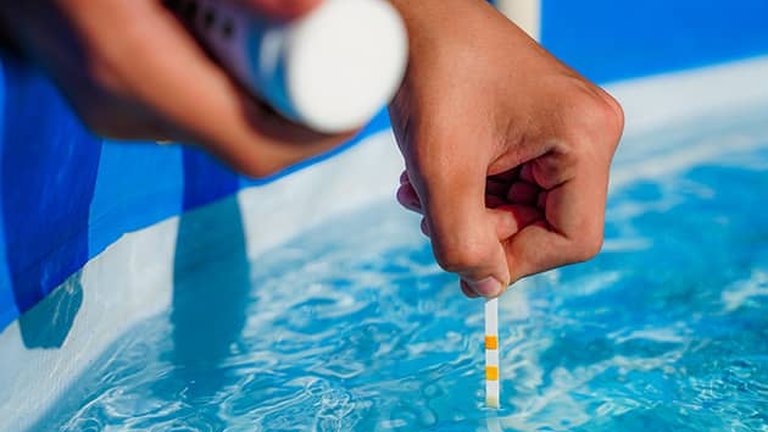
- Test and rebalance. Check pH, total alkalinity, and free chlorine. After heavy rain, expect pH and alkalinity to be low and chlorine to be depleted. Raise alkalinity first, then correct pH, then restore sanitizer. That order isn’t optional; alkalinity is the buffer that keeps your pH correction from bouncing.
- Watch the filter pressure gauge. Rising pressure means the filter is loading up with storm debris. Once it climbs 8 to 10 psi over the clean baseline, the filter needs attention before it becomes the bottleneck.
Still hazy 48 hours after the chemistry is balanced and the pump has been running? The filter itself is usually the problem. Cartridges saturated with fine debris and pollen stop polishing the water no matter how long the pump runs. That’s the point where a professional pool filter cleaning restores the system’s ability to actually clear the water.
Why cloudy keeps coming back in July
One storm is manageable. The Atlanta pattern in July is a storm on Tuesday, another on Friday, and a third rolling in Sunday afternoon while the pool is full of swimmers. Each one knocks the chemistry down before the water has recovered from the last one, and the bather load between storms piles sunscreen and organics on top. Pools in Buckhead and Sandy Springs get the tree debris version of this. Pools out in Milton and Alpharetta get the full-sun, packed-pool version. Both end up cloudy.
This compounding is why a pool that was effortless in May becomes a weekly fight by July. It’s also where consistent service earns its keep. Our weekly pool maintenance visits test and correct chemistry every week, clean the baskets, brush the walls, and check filter pressure. Every storm then hits a pool that starts from a balanced baseline instead of an accumulated deficit. Pools we service weekly almost never go green after a storm. There’s nothing for the storm to exploit.
When cloudy water is a bigger warning sign
Most post-storm cloudiness clears with circulation, filtration, and rebalanced chemistry. A few situations deserve a closer look.
Cloudiness with a green or yellow tint means an algae bloom has started, not just stirred-up debris. That needs treatment, not patience, and it’s exactly what our green-to-blue algae treatment process is built for.
A water level dropping faster than evaporation can explain may mean the storm shifted ground conditions or stressed the plumbing. Persistent water loss after a storm is worth a professional leak detection inspection.
Cloudy water plus a screeching or humming pump suggests the debris load damaged the impeller, or a power surge got to the equipment pad. Have equipment issues assessed before extended run time makes them worse.
Frequently Asked Questions
Why is my pool cloudy after it rains?
Rain dilutes chlorine, lowers pH and alkalinity, and washes debris, dust, and phosphate-rich runoff into the pool. The cloudiness is a mix of suspended fine particles and sanitizer that has fallen behind the contaminant load. Rebalancing chemistry and running the filter longer clears most cases within a day or two.
Should I shock my pool after heavy rain?
Usually, yes. Testing after a heavy storm almost always shows depleted free chlorine, and a shock dose helps the pool catch up, especially if debris sat in the water overnight. Balance pH and alkalinity first. Chlorine works best with pH in the 7.2 to 7.6 range, so correcting the water before you shock means every gallon of sanitizer does more work.
Does rain lower pool pH?
Yes. Rainfall in Georgia is typically acidic, in the 4.5 to 5.6 range, and a significant rain event measurably lowers both pH and total alkalinity in a residential pool. Test after every major storm and correct alkalinity before adjusting pH.
How long should I run my pool pump after a storm?
Run the pump for 12 to 24 hours of extended circulation after a significant storm. The filter needs sustained flow to pull suspended storm debris out of the water, and interrupted circulation is the most common reason cloudy water lingers.
Why is my pool still cloudy after shocking it?
If the chemistry is balanced and the water stays hazy for more than 48 hours, the filter is usually the bottleneck. Cartridges or grids loaded with pollen and fine storm debris can’t polish the water, and a professional filter cleaning typically resolves it.
Final thoughts
Atlanta’s summer storms aren’t an occasional disruption. They’re a weekly chemistry event from June through September. The owners who stay ahead of them treat every storm the same way: baskets emptied, debris out, pump running, water tested and corrected within 24 hours.
If your pool is spending more of July cloudy than clear, the pattern is fixable. BluVantage Pool Service keeps pools storm-ready across Buckhead, Sandy Springs, Brookhaven, Dunwoody, East Cobb, Marietta, Milton, Alpharetta, Johns Creek, and Roswell with CPO-certified technicians and a detailed checklist on every visit. See all the neighborhoods we serve, then call 404-224-9387 or schedule a pool assessment and let us handle storm season for you.