
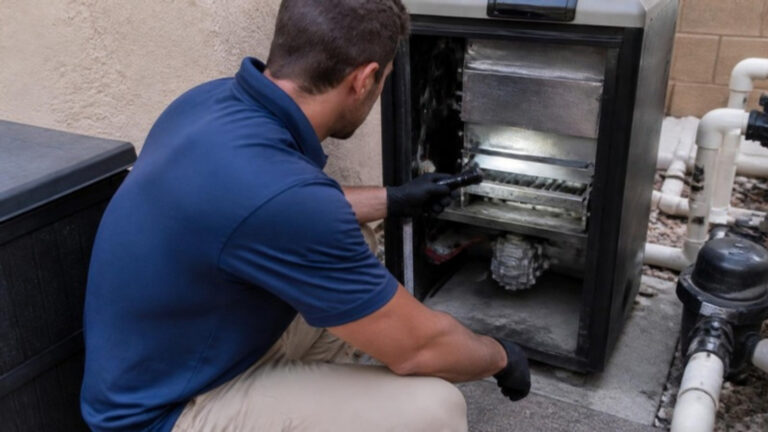
Pool heater repair cost questions arrive at our office on a schedule you could set a watch by. The first cold week of October, half the metro fires up a heater that has been asleep since April. A chunk of them refuse to light. Most owners then discover that heater pricing feels like a black box. It is not. Repairs sort into a handful of known failures with known price ranges.
Here are the real numbers for metro Atlanta and what each common failure costs. We will cover the honest repair-or-replace math, plus the one move that beats the October rush entirely.
Pool heater repair cost: the quick answer
Most pool heater repairs land between $150 and $800. The national average sits around $475 according to Angi’s 2026 cost data, and Atlanta pricing tracks close to that. Labor runs $80 to $120 an hour, parts run $20 to $600, and most fixes take a single visit. The wide range has a simple explanation. A heater is a stack of inexpensive sensors and switches wrapped around two expensive hearts, the control board and the heat exchanger. Which one failed decides your bill.
What each common failure costs
- Igniter or flame sensor: $150 to $400 fixed. The most common no-heat call, especially on the season’s first start.
- Pressure switch or water sensors: $100 to $300. Cheap parts, quick swaps.
- Gas valve: $250 to $600. A middle-tier repair that often masquerades as an igniter problem until testing.
- Control board: $300 to $700. The heater’s brain, and the usual suspect when the display is dead or the diagnostics make no sense.
- Heat exchanger: $1,000 to $2,000 with labor. This is the repair that totals heaters. On units past their mid-life it usually means replacement is the smarter spend.
- Thermostat, capacitors, and small electricals: $100 to $250 territory.
Why Atlanta heaters fail, specifically
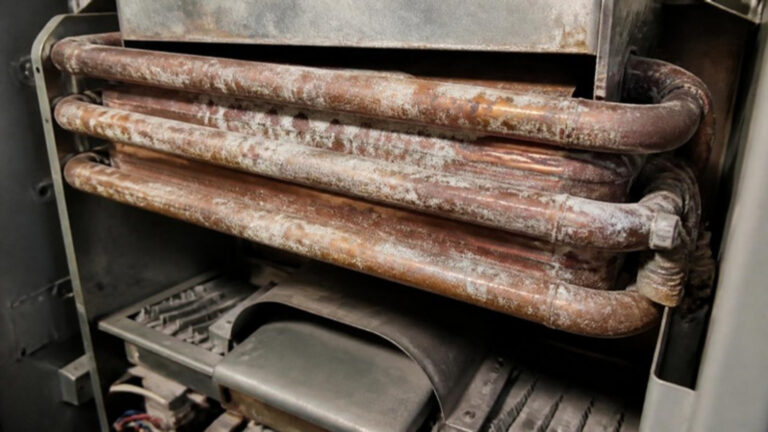
Two local villains cause most of what we repair. The first is chemistry. Water with high pH and high calcium deposits scale inside the heat exchanger. The passages narrow the way cholesterol narrows arteries. The heater works harder, heats slower, and eventually overheats or springs a leak. Scale is why the boring habits in our pH guide are secretly heater-protection habits. A heater’s lifespan often reflects the water it lived in more than its brand.
The second villain is the off-season itself. A Georgia heater sits idle from April to October, and idle cabinets attract tenants. Spiders web up burner orifices, wasps and rodents nest in warm corners, and debris settles where air should flow. Half of the no-start calls we run in October are nests and webs, not broken parts. That is good news at diagnosis time.
Add the flow problems that ride along with fall, since a heater cannot fire safely without full water flow. A loaded filter or packed baskets in leaf season will shut a healthy heater down. That fix costs a cleaning rather than a repair call.
Repair or replace: the honest math
The industry rule of thumb is the 50 percent line. When a repair, or a year’s worth of them, reaches half the cost of a new installed unit, replace. New gas heaters installed run roughly $2,500 to $4,500 in the metro. A $1,400 heat exchanger on a nine-year-old unit fails the math instantly, while a $250 igniter on a five-year-old unit passes easily.
Age tilts the decision too. Gas heaters live roughly 7 to 12 years in Georgia conditions. A big repair inside the last third of that life usually buys you the shortest, most expensive years. When the numbers point at replacement, the real question becomes which technology to replace with. That decision, gas versus heat pump, is exactly what our upcoming gas-versus-heat-pump guide covers.
The move that beats the October rush
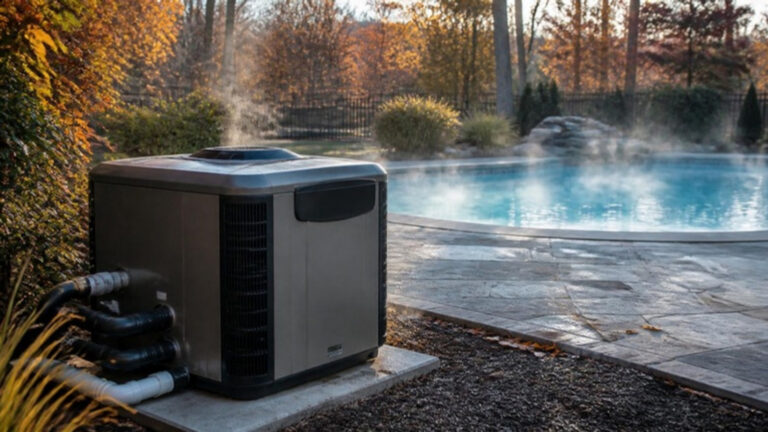
Run your heater for ten minutes now, before you need it. That single test separates you from the crowd. A heater that fails in early October gets diagnosed and fixed in days, at normal pricing, with parts in stock. The same failure discovered on the first 45-degree evening joins a queue. Every other heater in the metro failed the same night. We say it on every weekly maintenance visit, and October makes it urgent: test now, while the calendar is still yours.
One safety note that is not negotiable. Gas heater diagnosis and repair belongs to qualified technicians, full stop. Operator standards are strict on this for a reason. Gas valves, venting, and heat exchangers fail in ways that are dangerous rather than merely expensive. Clearing leaves from around the cabinet is an owner job. Anything behind the panel is not.
Frequently Asked Questions
How much does it cost to fix a pool heater?
Most repairs land between $150 and $800, averaging around $475. Small parts like igniters, sensors, and switches sit at the low end. Gas valves and control boards sit in the middle, and heat exchangers at $1,000 or more. Labor runs $80 to $120 an hour in metro Atlanta. Most repairs finish in one visit once parts are on hand.
Is it worth repairing a 10-year-old pool heater?
Usually only for small repairs. Gas pool heaters last roughly 7 to 12 years, so a 10-year-old unit is deep into its final act. A $200 igniter, sure. A $700 control board or any heat exchanger work fails the 50 percent rule against a $2,500 to $4,500 replacement. The new unit also brings efficiency gains that pay part of its own way. Get the repair quote, run the math, and let the numbers decide.
Why is my pool heater not working?
In October, the leading causes are unglamorous. Spider webs and nests fill burner assemblies over an idle summer. Loaded filters and full baskets choke water flow. Igniters and flame sensors fail on first start. Behind those come pressure switches, gas supply issues, and control boards. A surprising share of no-heat calls end as cleanings rather than repairs, which is the cheapest outcome on the menu.
How long do pool heaters last?
Gas heaters typically run 7 to 12 years, and heat pumps 10 to 15. Water chemistry is the swing vote. Balanced water protects the heat exchanger, while high pH and calcium scale it shut years early. Three habits push a heater toward the long end of its range. An annual fall test-fire, clean airflow around the cabinet, and steady chemistry.
How much does a new pool heater cost installed?
In metro Atlanta, most gas heater replacements land between $2,500 and $4,500 installed. Size and any gas line or venting work set the final number. Heat pumps run somewhat higher upfront and cost far less per swim-season hour to run. Which one fits your pool depends on how you heat and how often. That is the exact subject of our gas-versus-heat-pump comparison.
Final thoughts
Pool heater repair cost is not a mystery once you know the menu. Cheap sensors, mid-range valves and boards, and the exchanger that totals old units. Test-fire the heater now and keep the chemistry kind to the exchanger. When a big repair meets an old unit, spend the money forward instead of backward.
Heater will not light, or want the pre-season test done professionally? Our repair team services pool heaters across the metro. That includes Buckhead, Sandy Springs, Brookhaven, Dunwoody, East Cobb, Marietta, Milton, Alpharetta, Johns Creek, and Roswell. See the neighborhoods we serve, then call 404-224-9387 or schedule heater service. Beat the first cold snap to the decision.