
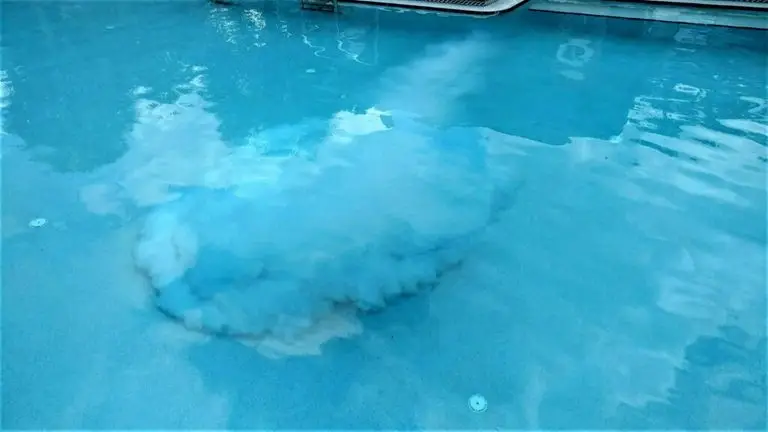
Cloudy pool water is the most common problem in pool care, and the most misdiagnosed. The haze is just light scattering off millions of suspended particles too small for your filter to catch yet. The real question is where those particles came from, because the answer decides whether you need an hour of filtration, a chemistry correction, or a filter cleaning. Guess wrong and you can pour a week of chemicals into water that only needed its filter fixed.
Here are the seven causes we find on Metro Atlanta service calls and how to tell which one you have. Then comes the routine that shows how to clear cloudy pool water fast, often overnight.
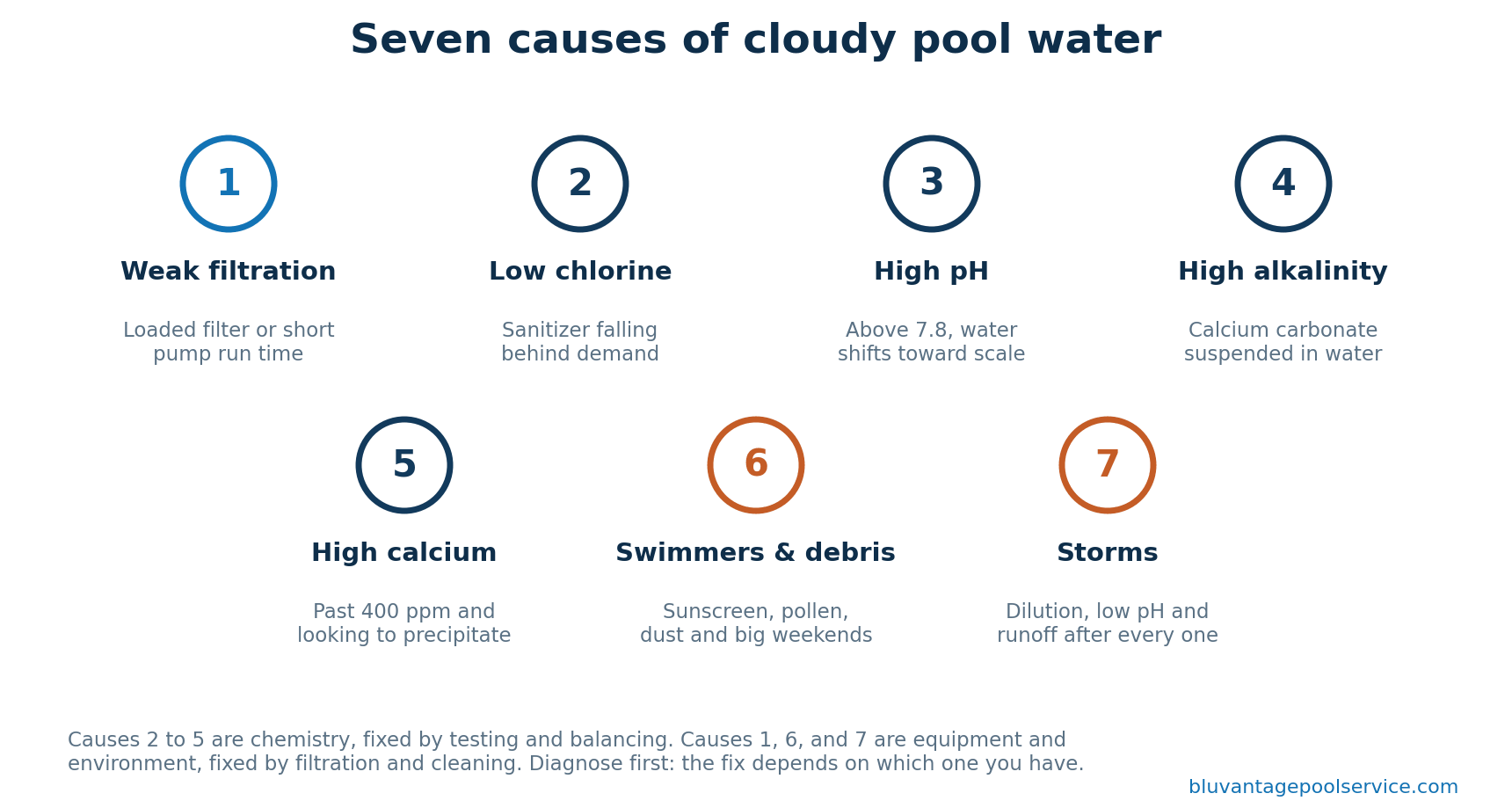
Why is my pool cloudy? The 7 causes
- Weak filtration. The filter is loaded, the media is past its life, or the pump simply is not running long enough. In an Atlanta summer, 8 to 12 hours a day is the working minimum.
- Low chlorine. When free chlorine falls behind, contaminants build faster than they burn off, and the early haze of a coming algae bloom looks exactly like innocent cloudiness.
- High pH. Push pH past 7.8 and the water shifts toward scaling. Minerals start coming out of solution, and chlorine works poorly on top of it.
- High total alkalinity. This one locks the pH high and can suspend fine calcium carbonate through the water, a genuine milky white that filtration alone is slow to fix.
- High calcium hardness. Common in older pools topped off for years. Past roughly 400 ppm, calcium looks for reasons to precipitate, and cloudy water plus clogged filters follow.
- People and debris. Sunscreen, sweat, pollen, and dust all add particles and eat chlorine. A big pool weekend can cloud a healthy pool by Monday.
- Storms. Atlanta’s summer thunderstorms dilute chlorine, crash pH, and wash in debris, a chain reaction we covered in our guide to why pools turn cloudy after rain.
One quick color check before treating. A green tint in the cloudiness means algae, which needs the full treatment in our green pool recovery guide rather than a clarity fix. Plain white or gray haze means you are in the right article.
Why Atlanta pools cloud up more than most
Three local facts stack the deck. The pollen season is legendary: for a few weeks each spring, metro Atlanta gets coated in a yellow film, and pools inhale it by the pound. Pollen particles are exactly the size that slips through tired filter media, which is why April haze so often lingers into May.
The season is long and the water gets warm. From June through September, pool water in the 80s multiplies both swimmer load and chlorine demand, so the margin between clear and cloudy shrinks. And the storm cadence never lets up, hitting pools every few days with dilution and debris all summer.
None of this changes the fix. It changes the discipline. An Atlanta pool that gets casual attention will spend part of every summer cloudy, and the same pool on a weekly rhythm will not.
Is it safe to swim in a cloudy pool?
No, and not only because of germs. The professional standard that governs commercial pools is blunt: swimming is allowed only when the bottom of the pool and its main drain are clearly visible. That rule exists because cloudy water hides swimmers in trouble. A child on the bottom of a hazy pool is invisible to the people standing around it, and rescue seconds get lost to murk.
The germ side matters too. Cloudiness often signals low sanitizer, and suspended particles shelter microorganisms from the chlorine that remains. That is why the CDC’s healthy swimming guidance treats clear water as a baseline for a safe pool. Close the pool until you can see the drain again. For HOA and commercial operators, that is not advice, it is the standard your inspector holds you to.
How to clear cloudy pool water fast: the overnight routine
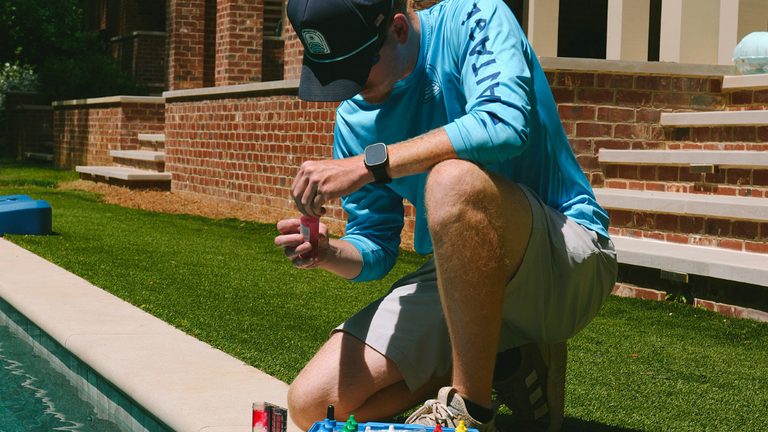
This is the sequence that clears most cloudy pools within 24 to 48 hours. It works because it fixes causes in order instead of throwing products at symptoms. You need a test kit, your pool brush, and patience with the pump schedule. Nothing here requires a product run to the pool store on day one.
- Empty the baskets and net out debris. Give the circulation system every chance to move water at full flow.
- Test everything, chlorine included. You want pH 7.4 to 7.6, total alkalinity 80 to 120 ppm, and free chlorine 1 to 3 ppm. Compare free and total chlorine, because a gap between them means combined chlorine, and that calls for a shock.
- Correct the chemistry in order: alkalinity first, then pH, then sanitizer. If chlorine was low or combined chlorine was high, shock at dusk.
- Run the pump 24 hours a day until the water clears. Filtration is what actually removes the particles. Everything else just makes them catchable.
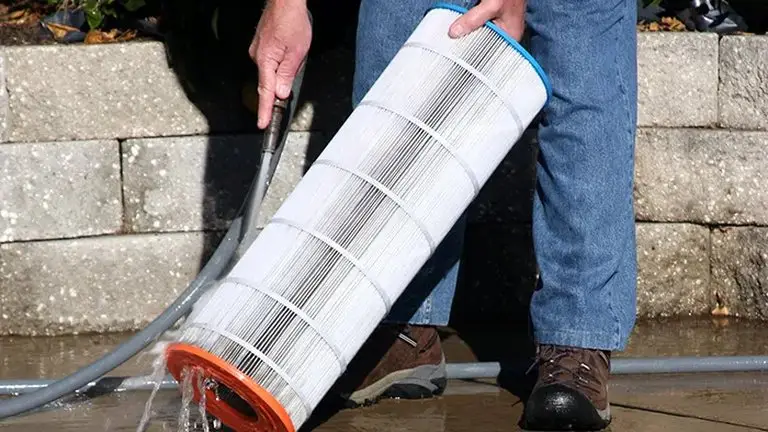
- Watch the filter pressure. Clearing cloudy water loads the filter quickly. Once the gauge climbs 8 to 10 psi over its clean baseline, backwash or rinse the cartridges and keep going.
- Brush the walls and floor once a day. It pushes settled particles back into circulation while the filter is running, instead of letting them sit.
Two things not to do while you wait. Do not stack products, because a clarifier and a flocculant added together cancel each other out and leave you with a gummed filter. And do not shock into high pH, since chlorine added at a pH above 7.8 loses much of its killing power and mostly buys you more cloudiness.
Give that routine 48 hours. Water that improves but has not finished clearing is a filtration problem being solved. Water that has not changed at all means the diagnosis is wrong, and it is time to look at the filter itself or the calcium numbers.
Clarifier or flocculant: when speed products actually help
Two products promise faster results, and they work in opposite directions.
A clarifier is a coagulant. It clumps microscopic particles into pieces big enough for your filter to catch, and the filter does the removal over the next two to three days. It is nearly foolproof, which is why it is the right choice for mild, stubborn haze. It is not fast, whatever the bottle says.
Flocculant is the heavy machinery. The classic version is alum, which forms a gelatinous mass in the water that traps suspended particles and drags them to the floor. The professional method has three stages. Circulate for about four hours so it mixes fully, shut the system down overnight, and vacuum the settled blanket straight to waste in the morning. Done right, it is the fastest fix there is for badly clouded water. Done wrong, it gums up filter media and skips the vacuum-to-waste step that makes it work, which many cartridge systems cannot do at all. If your filter has no waste setting, skip the floc or call us first.
Cloudy pool water after shock: usually normal, briefly
A pool that turns cloudy right after shocking is usually fine. Granular cal-hypo shock carries calcium, and in already-hard water it briefly pushes past the saturation point and hazes. With the pump running, that haze typically filters out within 24 hours.
Shock haze that lingers past a day is telling you something else. Either the filter cannot polish the water because it is saturated, or your calcium hardness was already high and the shock tipped it over. Test calcium before shocking again, and switch to liquid chlorine for the next dose if the number comes back high, since liquid adds no calcium.
When cloudy water will not clear, the filter is usually why
Chemistry gets the blame, but the filter closes most stubborn cases we see. Cartridges saturated with pollen and fine debris stop polishing water no matter how long the pump runs. Sand that has gone smooth with age passes fine particles straight back to the pool. Has your filter fought through an algae bloom or a heavy pollen spring without a deep clean? Then it is the prime suspect when balanced water stays hazy for days.
Media age matters too. Filter sand smooths out and loses its bite after roughly five to seven years, and cartridges have a finite number of deep cleans in them. And for pools whose calcium hardness has crept far past 400 ppm through years of top-offs and cal-hypo, no amount of filtration fixes it permanently. The lasting cure is a partial drain and refill with fresh water.
A professional pool filter cleaning restores the system’s ability to actually finish the job. And if cloudy keeps returning every few weeks, that is chemistry sliding between corrections. It is exactly what weekly pool maintenance exists to stop: tested, balanced water and a checked filter every seven days, so the haze never gets its opening.
Frequently Asked Questions
Why is my pool cloudy when my chemicals are balanced?
Because the problem is mechanical, not chemical. A filter saturated with fine debris, sand media that has gone smooth after five to seven years, weak circulation, or calcium hardness creeping past 400 ppm will all keep balanced water hazy. Start with a deep filter cleaning and a calcium test, since those two close most of these cases.
Is it safe to swim in a cloudy pool?
No. The standard that governs commercial pools allows swimming only when the pool bottom and main drain are clearly visible, because cloudy water hides a swimmer in trouble from people standing a few feet away. Hazy water also signals weak sanitizer, and suspended particles shelter germs from the chlorine that remains. Close the pool until it clears.
How long does it take for a cloudy pool to clear?
With the chemistry corrected and the pump running 24 hours a day, most cloudy pools clear in 24 to 48 hours. A clarifier adds two to three days of filtering. Flocculant works overnight but requires vacuuming the settled layer to waste the next morning. Water that shows no change after 48 hours points to the filter, not the chemistry.
Why is my pool cloudy after shocking it?
Granular cal-hypo shock carries calcium, and in hard water it briefly pushes past the saturation point and hazes. With the pump running, that haze normally filters out within 24 hours. If it lingers, the filter is saturated or your calcium hardness was already high. Test calcium, and use liquid chlorine for the next dose, since it adds none.
Should I use a clarifier or flocculant for cloudy pool water?
Use a clarifier for mild, lingering haze. It clumps particles for the filter to catch over two to three days and is hard to get wrong. Use flocculant for badly clouded water: circulate for about four hours, let it settle overnight, then vacuum the layer to waste. Skip floc if your filter has no waste setting, because the debris must leave the pool, not enter the filter.
Final thoughts
One more habit worth keeping: photograph your water when it is perfectly clear, from the same deck spot, in the same light. The next time the pool drifts hazy, the comparison shot ends the is-it-really-cloudy debate and tells you how far along the fix is.
Cloudy water is a message, not a mystery. Read the cause first: a tired filter, thin chlorine, chemistry drifting high, a crowd of swimmers, or an Atlanta storm. Then run the routine, in order, with the pump on around the clock. Most pools hand back clear water inside two days, and the ones that refuse are almost always waving at their filter.
If your pool is spending more time milky than clear, BluVantage Pool Service can diagnose it in one visit. We serve Buckhead, Sandy Springs, Brookhaven, Dunwoody, East Cobb, Marietta, Milton, Alpharetta, Johns Creek, and Roswell with CPO-certified technicians. See the neighborhoods we serve, then call 404-224-9387 or request a water assessment and we will get you back to seeing the bottom.