
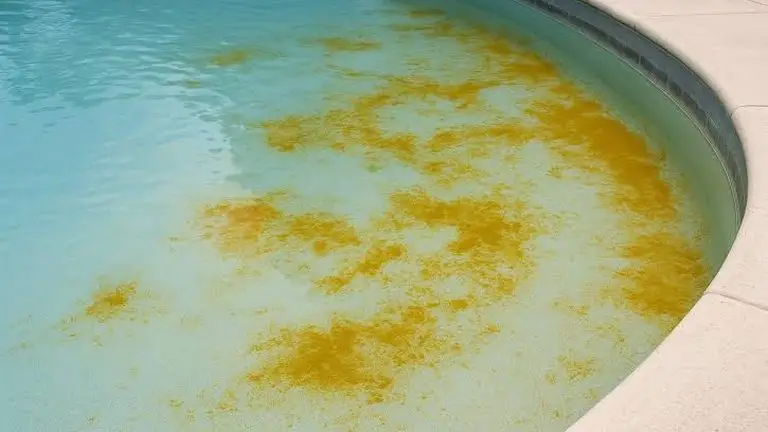
Mustard algae in pool corners is a master of disguise. It looks like sand on the steps, pollen on a shady wall, or a dirt stain near the deep-end light. You brush it, it vanishes in a yellow puff, and three days later it is back in exactly the same spot. Meanwhile your test kit swears the chlorine is fine.
The test kit is not lying, and neither are your eyes. Mustard algae is a chlorine-resistant strain that shrugs off the sanitizer levels that keep every other invader out. It also hides a second trick that explains almost every reinfection. Here is how to confirm what you have, the treatment that actually ends it, and the one step most people skip that guarantees it comes back.
Sand, pollen, or mustard algae? The brush test
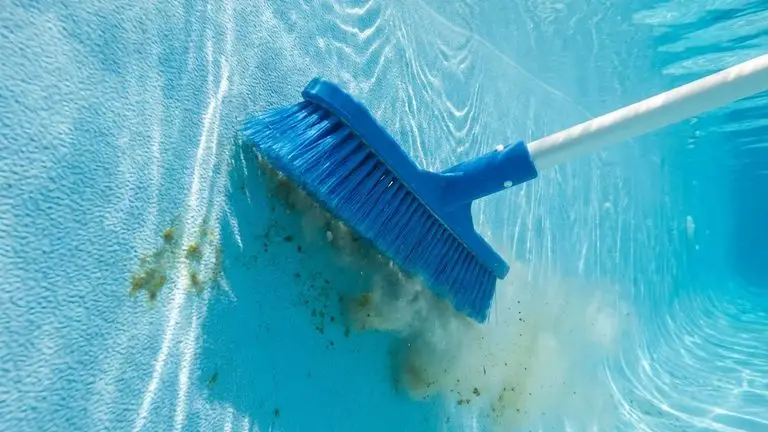
Run a brush through the patch and watch what happens. Mustard algae billows into a yellow-green cloud that hangs in the water before fading. Sand and dirt swirl briefly and resettle in the same shape. Pollen mostly floats and gathers at the surface and in the skimmer.
Then wait three days. That is the real test. Debris stays wherever gravity and circulation put it. Mustard algae regrows in the same shady spot it occupied before, usually on the wall with the least sun and the least water movement. In Atlanta this check matters more than most places. Our spring pollen coats pools in a yellow film that gets misdiagnosed as algae every April. Pollen skims out and does not regrow on a wall. Mustard algae does.
One more tell for close calls. Scoop a sample of the patch into a white cup with some pool water and let it sit in the sun for an hour. Sand sinks and stays put. Pollen floats and clumps. Mustard algae keeps its yellow-green tint and smears when you drag a finger through it, more like wet chalk than grit.
Why mustard algae laughs at your chlorine
Mustard algae is a cousin of common green algae with two upgrades. The first is chemical armor. A protective outer coating lets it tolerate the 1 to 3 ppm of free chlorine that would erase a green bloom. Normal chlorine slows it down. It does not kill it.
The second upgrade is where it chooses to live. The operator references note that yellow algae grows on pool walls in areas of poor circulation, and the deep corners are its favorite address. Less water movement means less chlorine delivery, and less sun makes the shady wall a comfortable home. Your pool’s weakest spot becomes its stronghold.
And then there is the trick that causes the heartbreak: mustard algae survives for months outside the pool. It rides out on swimsuits, floats, toys, brushes, and vacuum heads. Then it waits in a folded towel or a storage bin and reseeds the pool weeks after you thought you won. Treating the water without treating the gear is the single most common reason this algae comes back.
Why Atlanta pools meet it in late summer
Mustard algae in pool water shows up on our service routes most often from July through September, and the pattern is no accident. By late summer the water has been warm for months, the shady side of every screened and tree-lined pool has had a season of calm water, and half the neighborhood has taken a lake trip with the floats and suits that come home carrying passengers.
Storms play their part too. Every downpour knocks chlorine down for a day, and a resistant strain uses that window better than any other algae. A pool that rode out July on barely-enough sanitizer arrives in August with exactly the conditions this organism waits for.
How to get rid of mustard algae, step by step
The protocol looks like a green pool cleanup with two additions that make all the difference: decontaminating everything that touches the water, and shocking harder than feels reasonable.
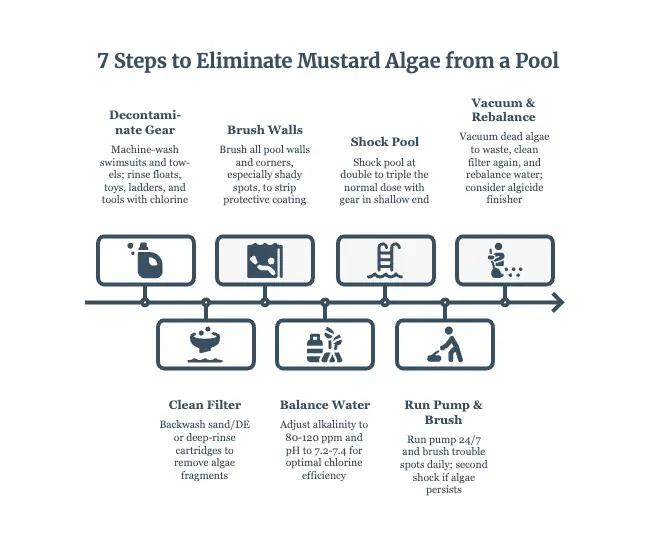
- Decontaminate the gear first. Machine-wash swimsuits and towels hot. Rinse floats, toys, ladders, and cleaning tools with a chlorine solution. Anything that cannot be washed goes into the shallow end during the shock, so the treatment sanitizes it for you.
- Clean the filter before you start. Media loaded with algae fragments will reseed the pool mid-treatment. Backwash sand and DE, or deep-rinse cartridges.
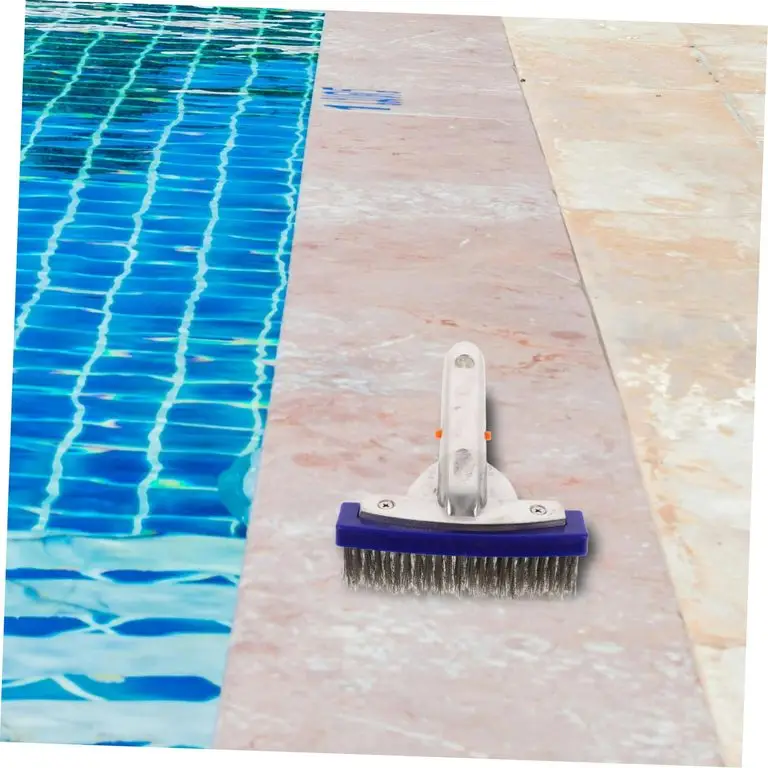
- Brush every wall and corner, with extra passes on the shady, still spots where the patches live. You are stripping the protective coating so the chlorine can reach the cells.
- Balance the water. Alkalinity 80 to 120 ppm, pH down to 7.2 to 7.4. Chlorine kills fastest in slightly acidic water, and this treatment needs every bit of that efficiency.
- Shock at double to triple the normal dose at dusk, with the gear sitting in the shallow end. Mustard algae’s tolerance is exactly why the standard single dose fails.
- Run the pump 24 hours a day and brush the trouble spots daily for three days. Hit the pool with a second shock 24 hours after the first if any yellow remains.
- Vacuum the dead algae to waste, clean the filter again, and rebalance. A specifically formulated yellow algicide as a finisher is the one case where the operator references endorse reaching for the specialty bottle.
The reinfection trap
Almost every mustard algae relapse traces back to a reservoir outside the water. The swimsuit that went straight from the pool to the drawer. A float that spent the treatment week in the garage. Even the brush that scrubbed the algae, then hung on the fence untouched. Each one carries live cells back into water that was genuinely clean.
One reservoir hides in plain sight: the automatic cleaner. Robotic and suction cleaners swallow live algae during an outbreak, and their filter baskets and brushes hold it like a seed bank. Empty the basket, rinse every surface with chlorine solution, and run the cleaner during the shock rather than storing it wet in the shed.
So when the pool clears, finish the job. Wash what can be washed and chlorine-rinse what cannot. If anything skipped the shock, run it through a bleach solution before it touches the water again. Then fix the conditions: aim a return jet toward the dead corner if your fittings allow it, and give that shady wall a weekly brushing forever. Mustard algae picked that spot for a reason, and the reason does not move.
Mustard, green, or black: know your enemy
The three pool algae families each demand a different fight. Green algae is the sprinter. It can take a whole pool in a day, and it dies fast under a proper breakpoint shock, as we covered in the green pool recovery guide. Black algae is the fortress, rooted into plaster and beaten only by the scrub-and-treat protocol in our black algae guide.
Mustard is the escape artist. It is easier to brush away than black algae and far harder to keep away than green. Its resistance lets it survive treatments that look successful, and its gear-hitchhiking lets it return after treatments that were. Beating it is less about force and more about thoroughness.
Still coming back? Check these two numbers
A pool that relapses even after honest decontamination usually has a chemistry handicap. The first suspect is stabilizer. Cyanuric acid that has crept far past 100 ppm slows chlorine so much that a resistant strain barely notices a shock, and the fix is a partial drain and refill, the same one described in our green pool guide. The second suspect is the filter. Media past its life passes fine algae fragments straight back to the pool, so what looks like regrowth is sometimes just recirculation. A professional filter cleaning settles that question.
Keeping it gone
Prevention is the same short list that stops its cousins, with one addition. Brush weekly, and give the shady corner deliberate attention. Hold chlorine steady between visits instead of letting it sag. Test after storms and heavy swim weekends. And wash anything that swims anywhere else before it comes home. A suit that visited Lake Lanier, a splash pad, or a friend’s pool is the classic delivery vehicle.
Community and HOA pools should add one rule to the deck signage playbook: outside floats and toys are the main way resistant algae arrives at a shared pool. Plenty of well-run facilities simply prohibit them, and a summer without a yellow outbreak is usually worth the grumbling.
Pools on a weekly rhythm rarely meet mustard algae twice. Every weekly pool maintenance visit brushes the walls, checks the chemistry, and keeps the sanitizer from ever dipping into the range where resistant strains get their foothold. The CDC’s healthy swimming guidance makes the same point from the health side: consistently sanitized water is the baseline everything else depends on.
Frequently Asked Questions
How do you get rid of mustard algae in a pool?
Treat the gear and the water together. Wash swimsuits and towels hot, chlorine-rinse floats and tools, and put unwashables in the shallow end. Clean the filter, brush every wall, set pH to 7.2 to 7.4, then shock at double to triple the normal dose at dusk. Run the pump 24 hours a day, brush daily for three days, then vacuum to waste and clean the filter again.
What does mustard algae look like?
Like yellow or yellow-green dust clinging to walls and corners on the shady side of the pool. Brush it and it billows into a cloud instead of resettling like sand. The confirming sign is regrowth: within about three days it reappears in the same low-circulation spot. Pollen, its Atlanta look-alike, floats at the surface, gathers in the skimmer, and never regrows on a wall.
Why does mustard algae keep coming back?
Because it survives for months outside the water. Unwashed swimsuits, floats, brushes, a robotic cleaner’s basket, and algae-loaded filter media all reseed a clean pool. Chemistry can be the accomplice too, since cyanuric acid past roughly 100 ppm blunts chlorine enough for a resistant strain to shrug off treatment. Decontaminate everything, clean the filter, and check the stabilizer number.
Will regular shock kill mustard algae?
Usually not. Mustard algae carries a protective coating that tolerates normal chlorine levels and standard single-dose shocks. It takes a double to triple dose, added at dusk with the pH lowered to 7.2 to 7.4, plus hard brushing beforehand so the chlorine reaches opened cells. Anything less fades the patches for a few days and leaves the colony alive.
Should I use a sodium bromide yellow algae treatment?
As a finisher, and with eyes open. Specialty yellow algicides are the one case operator references endorse, and sodium bromide products do kill mustard algae well. The catch is that bromide temporarily converts part of your pool to bromine chemistry, so chlorine readings behave strangely for a while afterward. Use it once alongside a shock, and ask before using it in a spa or salt water pool.
Final thoughts
Keep one photo of the treated corner on your phone and glance at it monthly through the season. Catching a returning patch at day three costs a brushing. Catching it at week three costs the whole protocol again, gear wash and all.
Mustard algae wins through patience, so you win through thoroughness. Confirm it with the brush test. Treat the gear along with the water, shock past its resistance, and keep brushing the corner it loved after it is gone. Skip the decontamination step and you will do the whole dance again in a month.
If the yellow keeps returning no matter what you throw at it, our algae treatment crews clear mustard algae across Buckhead, Sandy Springs, Brookhaven, Dunwoody, East Cobb, Marietta, Milton, Alpharetta, Johns Creek, and Roswell. See the neighborhoods we serve, then call 404-224-9387 or book a treatment visit and we will end the rematch cycle for good.