
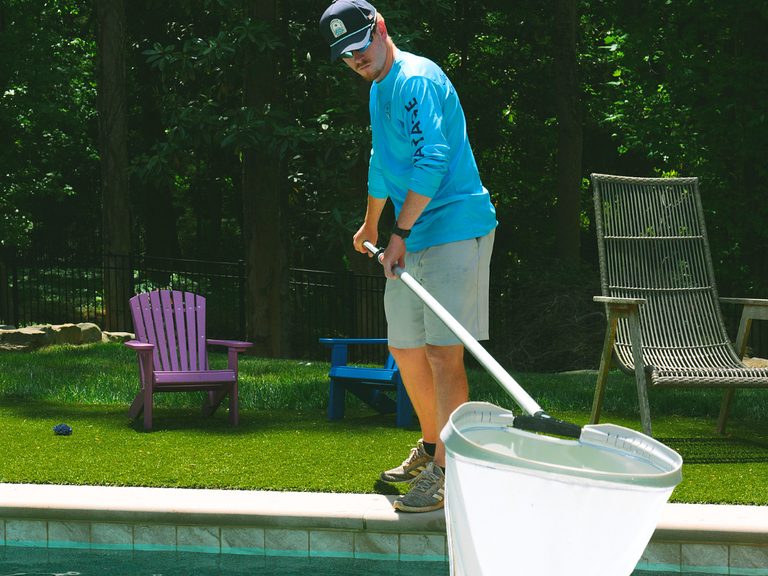
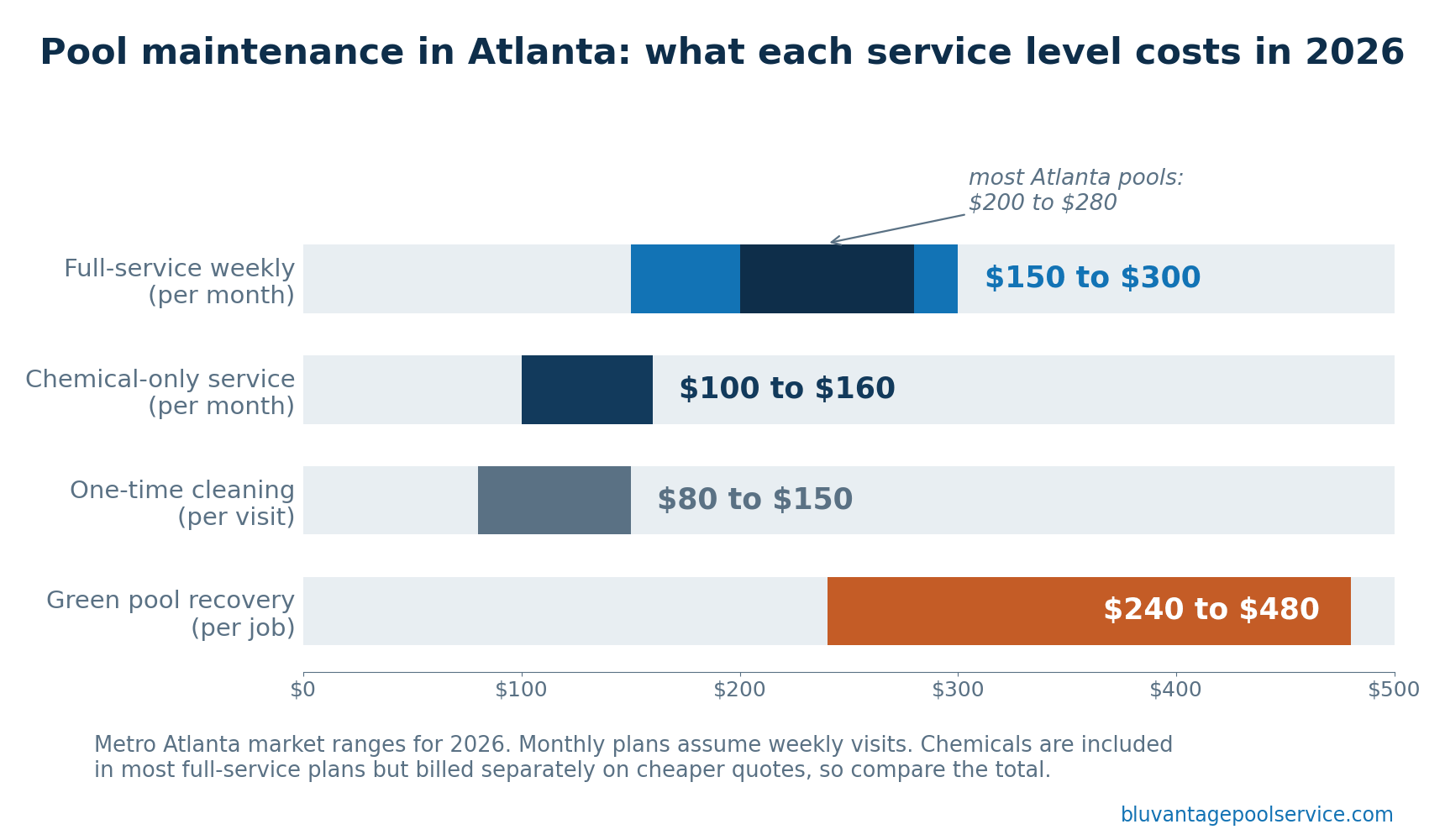
Pool maintenance cost is the first question we get on almost every call, usually before the caller has even told us where the pool is. So here is the straight answer for Metro Atlanta in 2026. Most homeowners here pay $150 to $300 a month for weekly full-service care. Chemical-only plans run $100 to $160 a month. A one-time cleaning lands between $80 and $150, and a neglected pool that has gone green can cost $240 to $480 to bring back.
Those are wide ranges, and the gap between $150 and $300 is real money. The difference comes down to your pool, your trees, your equipment, and what the plan actually includes. This guide breaks down where each dollar goes, what Atlanta conditions do to the price, and where you can save without ending up with a green pool in August.
What pool maintenance costs in Atlanta: the 2026 numbers
National surveys put regular pool service at $80 to $150 a month, but Atlanta runs higher than that floor for one simple reason: our season is longer and harder on water. Angi’s 2026 Atlanta data shows routine cleaning visits at $80 to $140 and seasonal opening or closing at $190 to $380 per service. Annual maintenance totals run from about $1,200 for a small pool to $2,900 for a large one.
Here is how the common service levels shake out across the metro area:
- Chemical-only service, $100 to $160 a month. A technician tests and balances your water each week. Skimming, brushing, and vacuuming stay on your plate.
- Full-service weekly maintenance, $150 to $300 a month. Everything is handled: chemistry, cleaning, baskets, filter pressure, and an equipment check on every visit. Most Atlanta pools fall between $200 and $280.
- One-time or vacation cleaning, $80 to $150 per visit, depending on pool size and condition.
- Green pool recovery, $240 to $480. Algae remediation takes multiple visits, heavy chemical doses, and serious filter work.
One caution about the low end. A $120 “full service” quote usually means a short visit, minimal chemicals, and no equipment inspection. The price looks good until the first algae bloom or a pump that dies without warning. Both of those cost more than a year of the price difference.
What a weekly service visit actually includes
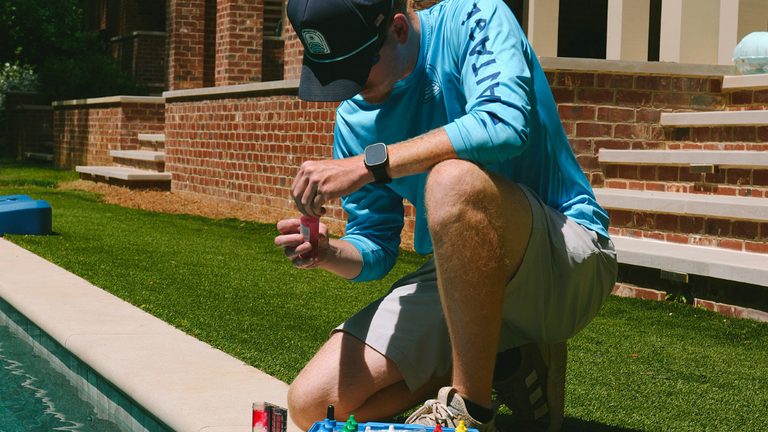
When you compare quotes, the visit checklist matters more than the number. Our weekly pool maintenance visits cover water testing and chemical balancing, skimming, brushing walls and steps, and vacuuming as needed. Each visit also includes emptying the skimmer and pump baskets, a filter pressure check, and an equipment inspection that runs through more than 50 points.
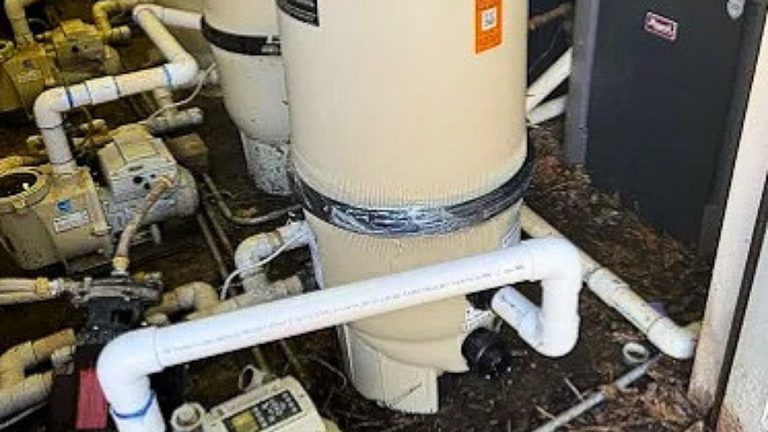
That last item is where a good service pays for itself. A technician who touches your equipment pad every week notices the pump that sounds slightly off, the filter pressure creeping up, and the damp spot that was not there last month. Caught early, each of those is a small fix. Ignored until it fails, the same problem becomes a $600 repair or a leak quietly adding to your water bill.
Chemicals are the other piece. Some companies include them, others bill them on top. Expect $40 to $80 a month in chemical costs for a typical chlorine pool here. Always ask which model a quote uses, because a $170 plan plus chemicals often costs more than a $220 plan that includes them.
Why Atlanta pools cost more to maintain than the national average
Three local conditions push the cost of pool maintenance in Atlanta above what national guides suggest, and Angi’s Atlanta cost data backs this up across every service category.
The season is long. Pools in the Northeast run three or four months. Atlanta pools run from April into October, and plenty of owners keep the water moving year-round instead of closing. More months of swimming means more months of chemistry, cleaning, and filtration.
The tree canopy is relentless. Oaks and pines in Buckhead, Sandy Springs, and Dunwoody drop something in every season: pollen in spring, seed pods and storm debris in summer, leaves in fall. In March and April, the yellow pollen film alone can double the workload of a visit. Every ounce of organic material that lands in your water burns through sanitizer and clogs filter media faster.
The storms never let up. From June through September, a thunderstorm rolls through every few days, and each one dilutes chlorine, drops pH, and washes debris into the water. We covered the full chain reaction in our guide to what Atlanta storms do to pool water. A pool on weekly service absorbs those hits from a balanced baseline. A pool on a stretched-out schedule falls behind after every storm and pays for it in chemicals.
What makes your specific pool cheaper or pricier
Within those market ranges, five things move your quote the most.
Size and volume come first. A 30,000-gallon pool needs more chemicals and more time per visit than a 15,000-gallon one, and pricing follows.
Surface type matters more than most owners expect. Plaster and gunite finishes are cement products, largely calcium carbonate, and unbalanced water starts etching them in a surprisingly short time. Keeping that water balanced takes steady chemical adjustment. Fiberglass and vinyl surfaces are inert, so they forgive more and cost less to maintain.
Saltwater systems trade one cost for another. You buy less chlorine, but the salt cell needs regular cleaning and eventually a replacement that runs $190 to $670. Newer builds in Milton and Alpharetta are heavily saltwater, and owners are often surprised the service cost barely drops.
Equipment age is the quiet multiplier. A tired single-speed pump or a filter past its service life makes every other part of pool care harder and more expensive. Old equipment also draws far more power, which shows up on your Georgia Power bill rather than your service invoice.
Trees and screening round it out. A screened or fenced pool in full sun is the easy case. A pool under mature oaks costs more to keep clean, in Atlanta more than almost anywhere.
Budgeting a full year: the real annual pool maintenance cost
Monthly numbers only tell part of the story. Pools generate a handful of predictable yearly expenses on top of the weekly plan, and budgeting for them up front beats being surprised in October.
Start with the service itself. Twelve months of full-service care at $200 to $280 comes to $2,400 to $3,360 a year. Owners who close for winter swap two or three of those months for an opening and a closing, at $190 to $380 per service.
Then add the recurring extras. A professional filter cleaning once or twice a season keeps the system honest. Salt cells need inspection yearly and replacement every three to seven years. Chemicals beyond the weekly baseline spike during pollen season and after big storms. A fair repair reserve for a pool with equipment under ten years old is $300 to $500 a year. Seals, o-rings, and motors wear out on their own schedule.
Electricity is the line item most owners forget. Pump power typically adds $65 to $100 a month during swim season, and an aging single-speed pump sits at the top of that range. Water top-offs add a little more in July and August.
Put together, the total annual pool maintenance cost for a typical Atlanta pool lands between $3,000 and $4,500, right in line with the $3,000 to $6,000 national ownership range HomeGuide reports. A well-kept fiberglass pool with new equipment can come in under that. A large plaster pool under old oaks with a fifteen-year-old pump will run past it.
Two things pull that annual number down over time. The first is weekly chemistry that never slides, because balanced water neither etches surfaces nor deposits the scale that clogs heater elements. The second is catching wear early, because almost every four-figure pool repair we see started as a two-figure symptom somebody watched for a season.
DIY vs. hiring a pro: the honest math
Handling your own pool care saves real money on paper. Budget $40 to $80 a month for chemicals, plus $100 to $300 up front for a test kit, brush, vacuum head, and poles. Then budget the part people forget: two to three hours of your week, every week, from April through October. Against a $250 monthly plan, doing it yourself saves somewhere around $1,500 a year.
The savings hold only if nothing goes wrong. One missed week in July, one badly timed storm, or one chemistry mistake can hand you an algae bloom. Correcting it costs $300 or more, and the filter usually needs professional cleaning afterward. The pattern shows up in our schedule every summer: the recovery calls start in June, and most of them begin with a DIY routine that slipped during a busy stretch or a vacation.
There is also the electricity question. On a pool without a heater, the pump is the biggest routine power draw, and running it the wrong hours or with the wrong equipment wastes $40 to $80 a month. Our guide to pool pump run time in an Atlanta summer walks through the right schedule, and it applies whether you hire anyone or not.
The honest summary: if you enjoy the routine, test faithfully twice a week in summer, and stay home most of the season, DIY works. If your July calendar looks like most people’s, the math tilts toward a service before the first green weekend.
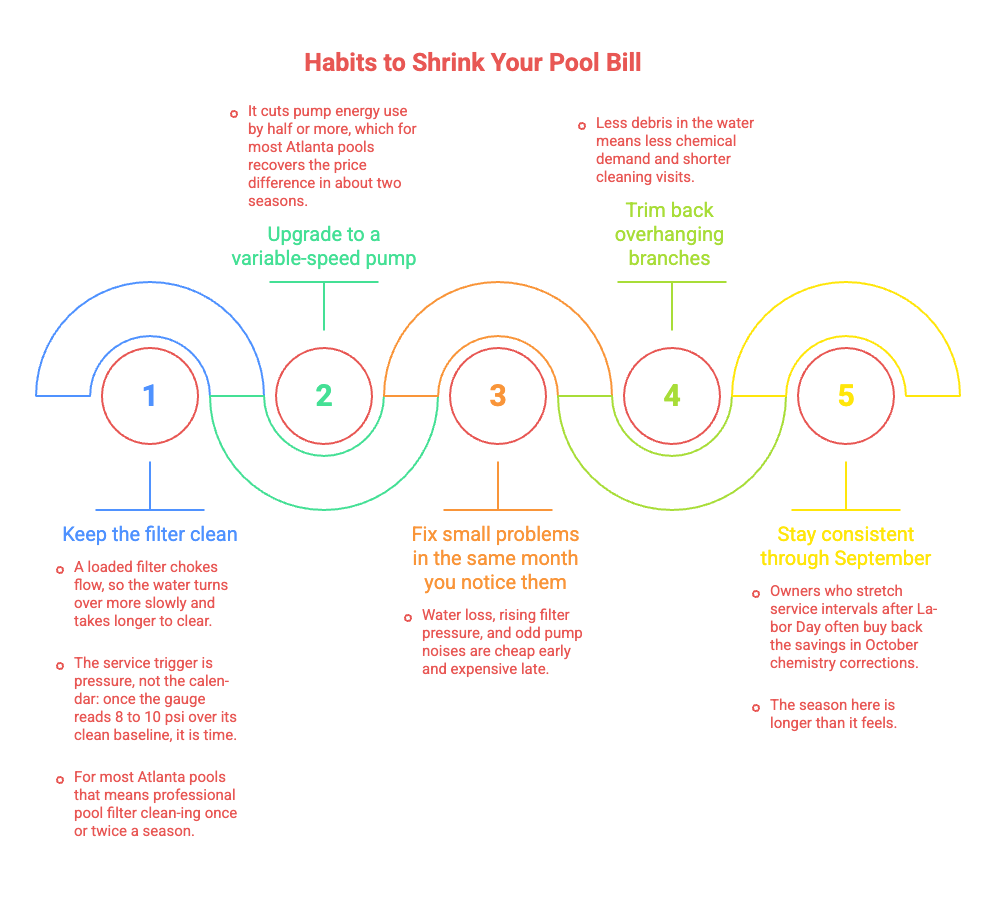
Five ways to lower your pool maintenance cost without cutting corners
Whatever route you choose, these habits shrink the bill.
- Keep the filter clean. A loaded filter chokes flow, so the water turns over more slowly and takes longer to clear. The service trigger is pressure, not the calendar: once the gauge reads 8 to 10 psi over its clean baseline, it is time. For most Atlanta pools that means professional pool filter cleaning once or twice a season.
- Upgrade to a variable-speed pump when the old one dies. It cuts pump energy use by half or more, which for most Atlanta pools recovers the price difference in about two seasons.
- Fix small problems in the same month you notice them. Water loss, rising filter pressure, and odd pump noises are cheap early and expensive late.
- Trim back overhanging branches. Less debris in the water means less chemical demand and shorter cleaning visits.
- Stay consistent through September. Owners who stretch service intervals after Labor Day often buy back the savings in October chemistry corrections. The season here is longer than it feels.
Frequently Asked Questions
How much does pool maintenance cost per month in Atlanta?
Most Atlanta homeowners pay $150 to $300 a month for weekly full-service pool maintenance in 2026. Typical pools land between $200 and $280. Chemical-only plans run $100 to $160 a month. Pool size, surface type, tree cover, and whether chemicals are included account for most of the spread.
What does weekly pool service include?
A full-service weekly visit covers water testing and chemical balancing, skimming, brushing walls and steps, vacuuming as needed, emptying the skimmer and pump baskets, and a filter pressure and equipment check. Always ask whether chemicals are included. A plan that bills them separately often costs more in total than a higher quote that covers everything.
Is it cheaper to maintain your own pool?
On paper, yes. DIY pool care in Atlanta costs $40 to $80 a month in chemicals plus $100 to $300 in startup tools, which saves roughly $1,500 a year against a full-service plan. The catch is the two to three hours of work every week. One slipped stretch in July can cause an algae bloom that costs $300 or more to fix.
Do salt water pools cost less to maintain?
Not by much. A salt system cuts what you spend on chlorine. In exchange, the cell needs regular cleaning and a replacement that runs $190 to $670 every three to seven years. The pool still needs the same weekly testing, balancing, brushing, and filtration, so professional service prices for salt pools in Atlanta sit within a few dollars of chlorine pools.
How much does pool maintenance cost per year in Atlanta?
Plan on $3,000 to $4,500 a year all-in for a typical Atlanta pool. That covers weekly service at $2,400 to $3,360 and pump electricity at $65 to $100 a month in season. Add one or two filter cleanings and a $300 to $500 repair reserve. A small fiberglass pool with newer equipment comes in lower, and a large plaster pool under heavy tree cover runs higher.
Final thoughts
For 2026, the realistic budget for professional pool care in Atlanta is $150 to $300 a month, with most full-service pools between $200 and $280. The right number for your pool depends on its size, surface, equipment, and how many trees stand over it. That is why we quote after seeing the pool rather than off a price sheet.
BluVantage Pool Service maintains pools across Buckhead, Sandy Springs, Brookhaven, Dunwoody, East Cobb, Marietta, Milton, Alpharetta, Johns Creek, and Roswell with CPO-certified technicians and a documented checklist on every visit. See all the neighborhoods we serve, then call 404-224-9387 or request a free weekly service quote and we will put an exact number on your pool.